
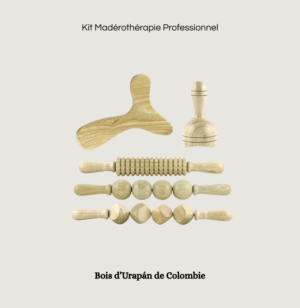
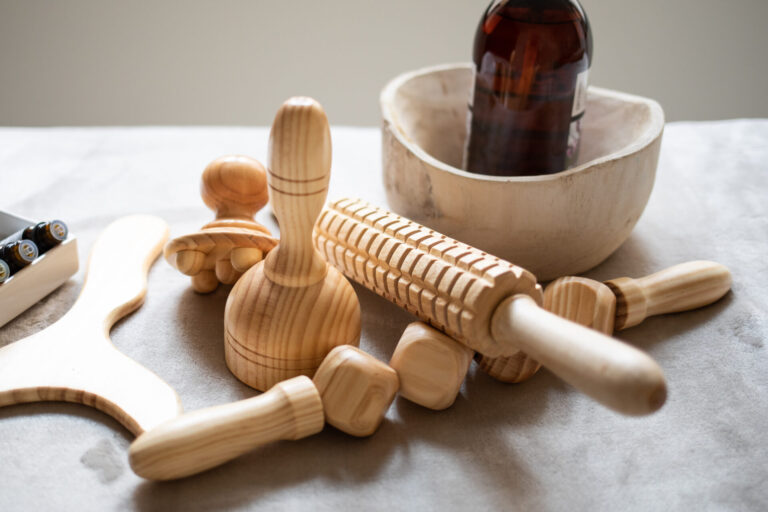
 Professional Maderotherapy Kit - Colombian Urapán wood
Cellulite: what the scientists really say
Cellulite: what the scientists really say
Between preconceived ideas and anatomical reality - understand orange peel skin so you can deal with it more calmly.
Cellulite is one of the most talked-about aspects of women's well-being. Yet despite the promises of miracle solutions, the reality is far more nuanced. To understand why it appears - and why some women seem to have little of it - we need to look at what's really going on under the skin.
Cellulite explained by anatomy
To understand this phenomenon, we need to explore the organisation of the subcutaneous tissues - a central approach in disciplines that study the human body as a whole, as in a osteopathic training, The role of fascia, fibres and circulation in tissue balance is analysed.
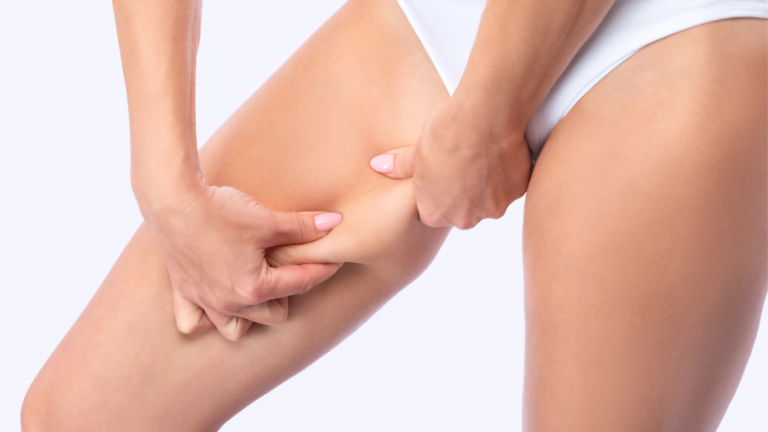
Beneath the skin are fat cells surrounded by connective fibres, which link the skin to the deeper layers of the body. When these cells increase in volume, they exert upward pressure. At the same time, certain fibres pull the skin downwards.
This opposing tension creates the characteristic indentations and bumps known as the orange peel. Cellulite is therefore not a pathology, but the result of the natural organisation of tissues.
The most common misconceptions widespread
Cellulite is surrounded by persistent myths. Here are the most common ones, debunked by research.
| Received idea | What science says |
|---|---|
| Only overweight people have them | False. Very thin women also have cellulite. Cellulite depends more on the structure of connective tissue than weight. - JEADV |
| A diet is enough to make it disappear | Incomplete. Weight loss may reduce the volume of fat cells, but it does not alter the structure of connective fibres. |
| There is a definitive treatment | Not yet. There is currently no method for permanently eliminating cellulite. Approaches aim to improve its appearance. - IJCS |
Why do some women seem less affected ?
If cellulite is so widespread, these visible differences can be explained by a number of biological factors.
Genetics
The structure of connective tissue varies from person to person. Some women have denser fibres, which limits the appearance of dimpling. Skin elasticity and fat distribution are strongly influenced by heredity. - AJCD
Hormones
Oestrogen influences the storage of fat in the thighs, hips and buttocks. Cellulite often appears during puberty, pregnancy or hormonal changes.
Traffic
Less efficient blood and lymph circulation encourages fluid retention in the tissues, accentuating the uneven appearance of the skin.
Colombian madero therapy: wooden massage for cellulite
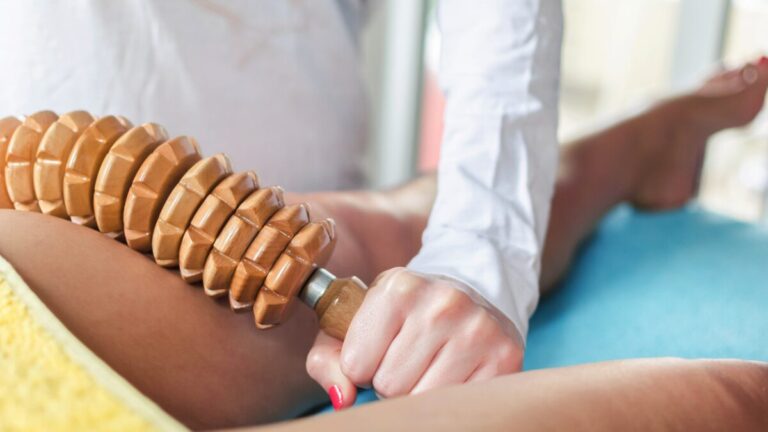
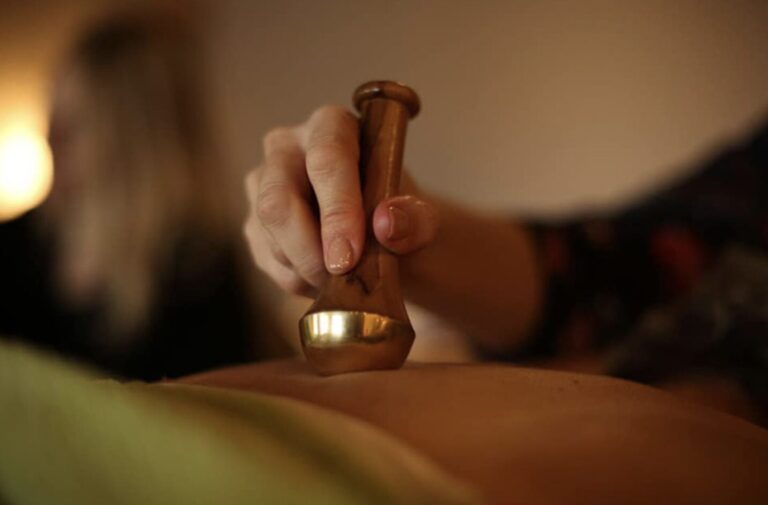
Originating in South America, madero therapy uses wooden instruments specially designed to work the tissues in depth. This Colombian massage technique, now widely used in beauty physiotherapy, acts on several mechanisms.
According to the Journal of Bodywork and Movement Therapies, Deep massage techniques encourage microcirculation and stimulate subcutaneous tissue. When practised regularly, maderotherapy can help to :
- Stimulate local blood circulation
- Activate lymphatic drainage
- Mobilise fatty tissue
- Improve skin elasticity
How to reduce cellulite at home?
Cellulite is a natural phenomenon, but many women want to improve its appearance without resorting to expensive treatments. It's legitimate to look for ways to reduce cellulite at home - even if science reminds us that total disappearance remains unlikely.
However, certain habits, practised regularly, can visibly improve skin texture.
Manual massage
This is one of the most accessible methods. By stimulating blood circulation and lymphatic drainage, regular at-home massages can help mobilise tissues and improve the appearance of the skin over the long term.
Targeted physical activity
Strengthening the muscles of the thighs, buttocks and hips improves skin tone and supports subcutaneous tissue. Simple exercises carried out at home can be enough to make a difference to skin firmness.
Hydration and a healthy lifestyle
Good daily hydration and a balanced diet support tissue function and the quality of circulation. These habits won't make cellulite disappear, but they will help maintain suppler, more elastic skin.
Home maderotherapy
More and more women are incorporating Colombian madero therapy into their home routines. Using specially shaped wooden tools, it is possible to reproduce the drainage and kneading movements on the areas concerned - thighs, stomach, arms - to stimulate the tissues and gradually improve the appearance of cellulite. Kits are available from Maderobox.com for easy practice at home.
Cellulite isn't an exception - it's a common condition. a natural characteristic of the female body. By understanding it better, you can approach it with more distance, and choose the actions that really help.


 English (UK)
  Français
  Español